


Bebefinn Birthday Party: Game
3.28.00 Reviews
App Specs
- Version
- 1.7
- Updated On
- License
- Free
- Downloads
- 500,000+
- Developer
- The Pinkfong Company
- Categories
- Educational
- Platform
- Android, iOS
Screenshots
 Analysis by AppCompare
Bebefinn Birthday Party is a cheerful educational game from The Pinkfong Company that turns a birthday theme into a simple sequence of creative activities. I found its appeal less in challenge and more in the pleasure of making something, seeing an immediate response, and starting again with a slightly different idea. It is aimed at young children, and the Everyone age rating reflects that approachable design.
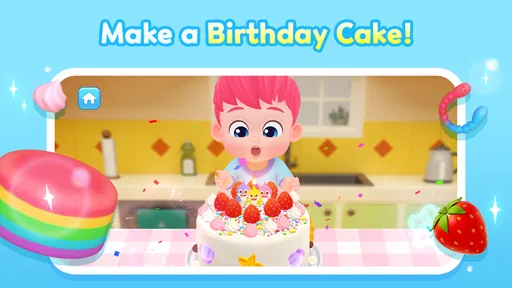
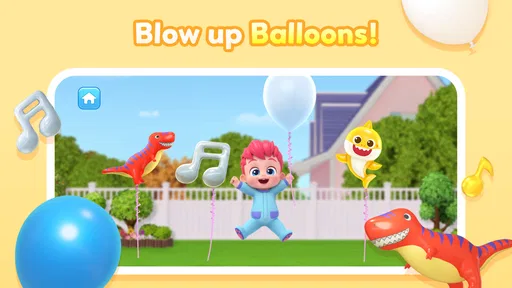
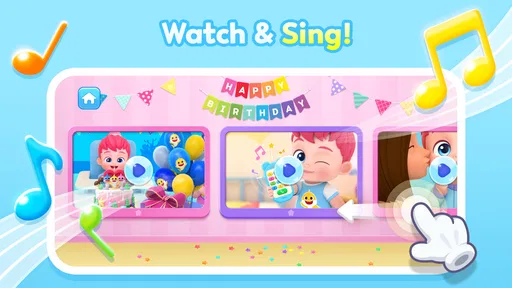
The game is free to download, which makes it easy to try before deciding whether it belongs on a child’s device. Its store summary points to cake-making, balloon decorating, and party songs, and those elements give the experience a clear shape: choose an activity, interact with colorful objects, enjoy the result, then return to the party setting. That loop is uncomplicated, but it is also the reason the game can work well during a short break rather than demanding a long, focused play session.
How the birthday loop feels in everyday play
I find the birthday loop works best as a short, shared activity: a child can try a simple action, notice the party change, and decide what to do next without needing a long explanation. I’d treat each visit as a small creative moment rather than a session that needs to keep expanding. That makes it easier to tell whether the game’s gentle pace suits the child before making it part of a regular routine.
The first action is deliberately easy
My first impression is that the game wants children to act immediately rather than study instructions. A child can approach the birthday activities through familiar gestures and visual cues, which is important for players who are still developing reading confidence. The cake and balloons provide recognizable goals, so the child does not need to understand a complicated story before getting started.
That simplicity is a real strength for a preschool-style experience. In a typical everyday situation, I could hand the device to a child while preparing a snack or waiting for an appointment and expect the child to understand the basic invitation: make something festive and enjoy the party. The game does not appear to rely on a difficult opening sequence, and that reduces the chance of a child abandoning it before the fun begins.
The first useful tip is to let the child explore the controls without taking over. Because the activities are built around a birthday party, the theme itself explains much of what to do. An adult who immediately demonstrates every action may accidentally turn a small creative task into a passive viewing session. I would give a child a moment to try the cake or balloon interaction independently, then offer help only if the child becomes frustrated.
There is also a practical advantage to the game’s narrow focus. Unlike a broad learning app with several unrelated subjects, this one keeps the child inside one familiar event. That can be helpful for children who respond better to repetition and predictable surroundings than to a menu filled with many choices.
Worth Reading Before You Choose

EA SPORTS FC Mobile 26 Is a Bigger Football Game, but It Takes Time

Flipboard Shows What News Apps Must Do Beyond the Feed

Switching to Android Auto Means Rethinking Your Driving Routine

Google Calendar Makes a Crowded Week Easier to Manage

Ludo King Makes the Most of the Minutes Between Plans

Baby Panda World Brings Quick Play to Modern Phones, but Its Game Library Feels Busy
Feedback keeps the activity moving
The core feedback rhythm is easy to understand: the child performs an action, the party scene responds, and the result encourages another action. Decorating a cake or arranging party elements feels meaningful because the screen changes in response to the child’s choice. The songs add another layer of feedback, making the activity feel like a celebration rather than a worksheet disguised as a game.
This rhythm matters more than complexity here. A young player may not be looking for a difficult puzzle; they may simply want confirmation that their touch had an effect. The game’s strongest moments come from that direct relationship between gesture and visible party progress. It gives the child a small sense of authorship without making the task demanding.
I would not describe the experience as deep problem-solving. There is no reason to expect the same level of strategy found in a traditional puzzle game, and that is not a criticism by itself. The educational value is closer to guided interaction, recognition of objects, following a simple sequence, and expressing a preference through decoration. Parents looking for structured lessons in letters, numbers, or reading should choose a more focused learning tool.
One non-obvious way to use the feedback loop is as a conversation starter. Instead of asking only whether the child likes the finished cake, I would ask which decoration should come next, what colors belong at a party, or what song might fit the celebration. The game supplies the visual prompt, while the adult adds the language practice. Used this way, it becomes more than screen tapping without requiring the app itself to provide a formal lesson.
The limitation is that immediate feedback can become repetitive for older children. A child who already wants rules, competition, or a clear target may quickly feel that the actions are too predictable. The same gentle rhythm that suits a first-time player can feel shallow to a child who has moved beyond simple cause and effect.
The reward is the party itself
The reward structure is visual and emotional rather than numerical. The child sees a more festive result, hears party music, and gets the satisfaction of completing a small celebration. That is a sensible choice for a young audience because it avoids turning a birthday activity into a performance test. There is no need to compare scores or worry about failing a level before enjoying the outcome.
I especially like this approach for children who become discouraged by conventional games. A child can experiment with the cake or balloons and still feel successful, even if the result is not the one an adult expected. The reward is not reserved for perfect play; it comes from participation. The game makes completion feel like a celebration rather than an exam.
That said, the reward may not hold attention indefinitely. Once a child understands that every interaction leads to a pleasant response, the surprise naturally decreases. The game is therefore best viewed as a short-form activity: something to revisit for a few minutes, not necessarily a single title that replaces every other toy or educational app.
A useful routine is to ask the child to choose one birthday task before starting. For example, one session can focus on the cake and another on the balloons or songs. This gives the child a small sense of purpose and prevents the experience from becoming random tapping. It also helps an adult notice whether the child enjoys creating, listening, or simply watching the party scene change.
The free entry point is helpful for families who want to test that fit. However, the game includes in-app purchases ranging from $8.99 to $109.99 per item. That is a significant consideration for a child-focused title. I would check the purchase settings on the device before handing it over, explain that not every on-screen option is automatically available, and make any buying decision myself rather than leaving it to a young player.
Resetting the party gives it short-session value
After the party has been completed, the main reason to begin again is the activity itself, not a long-term progression system that I would associate with a larger game. The child can return to the birthday theme and repeat the creative sequence. That reset is useful because young children often enjoy familiar actions, but it also defines the game’s limits.
For a parent, this makes the title easy to fit into a daily routine. A short session before dinner, a calm activity during travel, or a few minutes while waiting can work better than an app that expects the child to remember a complicated campaign. The reset also means the child does not need to preserve a previous state to enjoy the next visit. Each return can feel like another small party.
My second practical insight is to use the reset as a boundary rather than an invitation to keep playing endlessly. When the child finishes the celebration, that is a natural stopping point. An adult can say, “The party is finished for now,” and move to another activity without interrupting a difficult level or leaving a story unresolved. This makes the game more manageable in homes that are trying to keep screen time predictable.
The trade-off is replay depth. Children who want new worlds, unlockable challenges, or a growing collection may find the reset too close to repeating the same routine. The game is a better match for comfort, repetition, and quick creative play than for sustained progression. If your child needs a stronger sense of advancement, a structured educational game with stages or skill tracking may be a better choice.
Where it fits among children’s alternatives
Compared with a basic digital coloring app, this game has a clearer context. The child is not only filling a blank space; the actions belong to a birthday event with a cake, balloons, and music. That theme can make the activity easier to understand and more inviting for a child who needs a reason to interact.
Compared with a formal educational app, though, it is less suitable for measurable practice. It does not belong in the same role as an app chosen specifically for phonics, arithmetic, handwriting, or language drills. I would use it as a playful companion to those tools, not as a replacement. Its educational character comes through interaction and participation rather than a defined academic curriculum.
It also differs from competitive children’s games. There is no need for a child to beat an opponent or protect a streak to enjoy the birthday setting. That makes it gentler for relaxed play, but it also removes the tension that keeps some older children engaged. The right alternative depends on the child’s goal: choose this for a friendly creative break, and choose a challenge-based game when practice, mastery, or competition is the priority.
The developer is The Pinkfong Company, a name associated here with a child-friendly presentation and a familiar entertainment style. The current version is 1.7, and the game requires Android 8.0 or later. Families using an older device should check compatibility before planning around it. On supported hardware, the modest concept should be easy to understand, but the overall experience still depends on whether the child enjoys repetition and musical party themes.
Who will enjoy it, and who should skip it?
I would recommend it to parents of young children who want a low-pressure birthday-themed game with immediate visual feedback. It is particularly suitable for a child who likes pretend celebrations, music, colorful decorations, and activities that can be completed without reading a lot. It can also be useful when an adult wants a short, self-contained digital activity rather than a complicated game that takes time to explain.
I would be more cautious if the child is already looking for advanced puzzles or a strong sense of progression. The same simplicity that makes the game approachable may make it feel limited after repeated sessions. I would also skip it as a primary learning purchase if the family’s main goal is school preparation, because a dedicated literacy or numeracy app would offer a more direct path to that outcome.
The average rating is 3.2 from around 559 ratings, with 500K+ installs. I would read those figures as a sign that the game has reached a meaningful audience but has not produced universal enthusiasm. That matches my own balanced view: the concept is accessible and pleasant, yet its narrow loop will not suit every child. The rating should encourage realistic expectations rather than make the game seem like a must-have for every family.
Because the age rating is Everyone, the presentation is positioned for a broad audience. Even so, an adult should still preview the purchase flow and decide whether the available content fits the child’s needs. An age label does not tell you whether a child will enjoy the repetition, how long a session should last, or whether the music will be welcome in your particular home.
My verdict on the action-feedback-reward-reset loop
What works best is the complete loop: the child takes a simple action, receives an immediate party response, enjoys a visible or musical reward, and can reset for another brief celebration. Every part supports the same gentle purpose. There is no awkward shift from cake-making to an unrelated challenge, and the birthday theme gives the repeated actions a reason to exist.
My main reservation is that the loop has limited room to grow. It is engaging because it is clear, not because it is complex. I would install it for a young child who needs a friendly, low-pressure activity, especially if birthday play is already a strong interest. I would not choose it for a child demanding deep gameplay, academic progression, or a large variety of challenges.
In practical terms, I would try the free version during a supervised short session, watch which activity holds the child’s attention, and decide from there. If the child naturally talks about the decorations or invents a birthday story, the game is doing something valuable beyond occupying time. If the child finishes once and immediately asks for a more challenging game, that is useful information too.
Overall, Bebefinn Birthday Party is a focused educational game with a warm, repeatable loop. Its best quality is the way it turns small actions into an immediately understandable celebration. Its main weakness is the same narrowness: once the novelty fades, there may not be enough variety for every player. For the right young child, however, that simplicity is not a flaw. It is what makes the game easy to enter, easy to pause, and easy to share with an adult.
Pros
- Simple controls make it suitable for very young children.
- Bright animations and familiar characters keep playtime engaging.
- Short activities work well for quick entertainment sessions.
- No advanced gaming skills are required to enjoy the mini-games.
- Birthday-themed content encourages playful interaction and exploration.
Cons
- Gameplay may feel repetitive after several sessions.
- Some features or content may require in-app purchases.
- Frequent animations can be overstimulating for sensitive children.
- The app may use considerable storage for its media content.
- Parental supervision is recommended during device use.
FAQs for Bebefinn Birthday Party: Game
What is Bebefinn Birthday Party: Game?
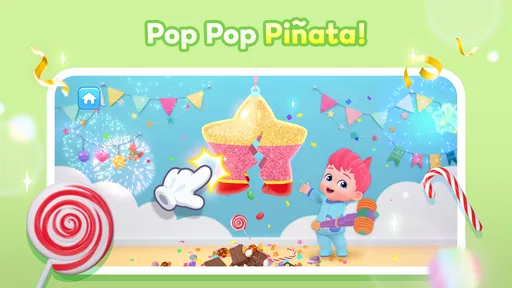
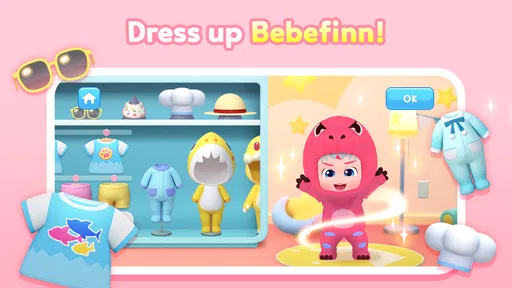
Bebefinn Birthday Party: Game is a family-friendly children’s game centered around preparing and enjoying a colorful birthday celebration with the Bebefinn characters. Players can take part in simple activities such as decorating, choosing party items, interacting with characters, and completing entertaining mini-games. Its presentation is designed for young children, with bright visuals, cheerful music, and easy controls that do not require advanced gaming experience.
Is Bebefinn Birthday Party: Game suitable for young children?
The game is primarily aimed at preschoolers and younger children who enjoy familiar characters, music, and simple interactive activities. The controls are generally straightforward, and the tasks are designed to be easy to understand without reading complicated instructions. However, parents should still review the available settings and supervise playtime, especially because children may encounter advertisements, optional purchases, or links to other content depending on the version installed.
Does Bebefinn Birthday Party: Game require an internet connection?
Some parts of Bebefinn Birthday Party: Game may work without a continuous internet connection after installation, which is useful for travel or limited-data situations. Nevertheless, an internet connection may be needed for downloading the game, displaying advertisements, restoring purchases, receiving updates, or accessing certain online features. Availability can differ between Android and iOS versions, so checking the store description before downloading is recommended.
Is Bebefinn Birthday Party: Game free to download and play?
The game may be available as a free download, but free access does not always mean that every feature is included without restrictions. Depending on the platform and current release, the app can contain advertising, locked content, or optional in-app purchases. Parents should check the pricing information in Google Play or the App Store and use device-level purchase controls if children play independently.
Is Bebefinn Birthday Party: Game safe for children?
Bebefinn Birthday Party: Game is presented as children’s entertainment, but safety also depends on the app version, advertising partners, permissions, and external links included by the developer. Before allowing a child to play, adults should inspect the privacy policy, disable unnecessary permissions, configure parental controls, and check whether ads or purchases can be restricted. Supervision is especially advisable for younger users.


